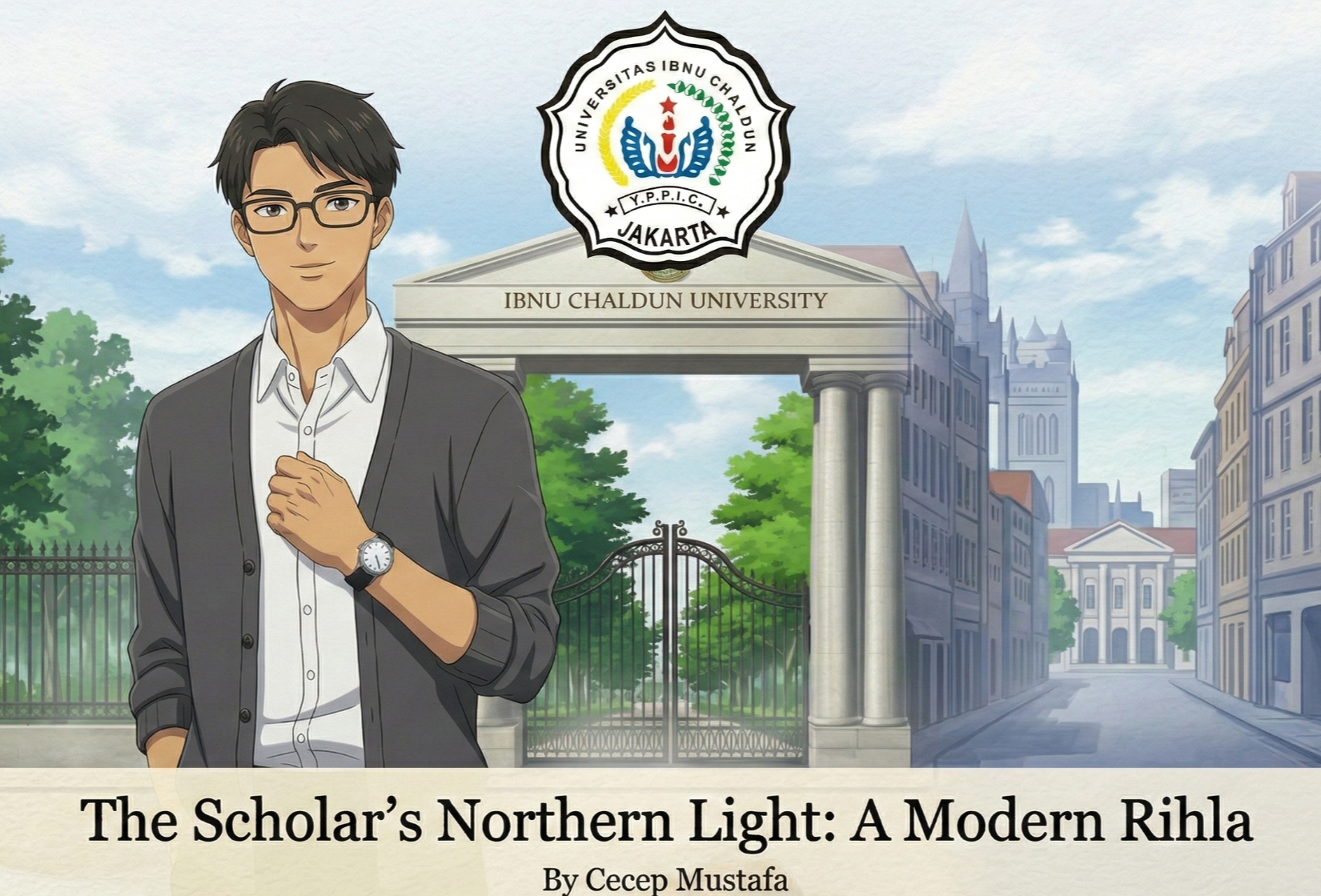
Notes from Cecep Mustafa’s Journey from the Equator to Scotland
There’s a gentle boldness that comes with living on the equator.
In Jakarta, the sun behaves. It rises and sets with faithful symmetry. Faith, meals, academic routines — all synchronized to a stable rhythm that feels almost divinely calibrated. For Cecep Mustafa, that rhythm once framed his life as a lecturer in the postgraduate program at Ibnu Chaldun University. The classroom was familiar territory. The intellectual debates were grounded in Indonesian socio-legal realities. Time itself felt predictable.
Then came the leap northward — as an LPDP Awardee 1, entrusted not merely with a scholarship, but with a national expectation.
And Scotland recalibrated everything.
When Latitude Becomes Philosophy
In Edinburgh or Glasgow, daylight stretches and contracts with unsettling freedom. The Indonesian scholar quickly learns that time, in the North, is not obedient. In winter, darkness lingers like an uninvited guest. In summer, the sun refuses to surrender.
For someone raised in equatorial constancy, this is more than meteorology — it is existential adjustment.
The first shock is climatic. The second linguistic. Academic English is demanding enough; the thick Glaswegian cadence turns ordinary conversations into interpretive exercises. A simple exchange at a bus stop can feel like fieldwork in semiotics.
But perhaps that is the point.
A doctoral journey is not designed for comfort. It is designed for reconstruction.
Ramadan Under the Relentless Sun
And then comes Ramadan.
In Indonesia, fasting spans roughly twelve hours. Manageable. Familiar. But in Scotland, summer fasting can stretch toward nineteen or even twenty hours. The sun rises when the city still sleeps and sets long after fatigue has settled into the bones.
Hunger is tolerable. Thirst in Scotland’s cool air is manageable. The true adversary is caffeine withdrawal — the quiet tyrant of academic life.
The empty mug on the windowsill becomes a metaphor. Mine — white, almost monastic — sat untouched during those long days. It symbolized surrender, but also discipline. The absence of coffee sharpened something else: intentionality.
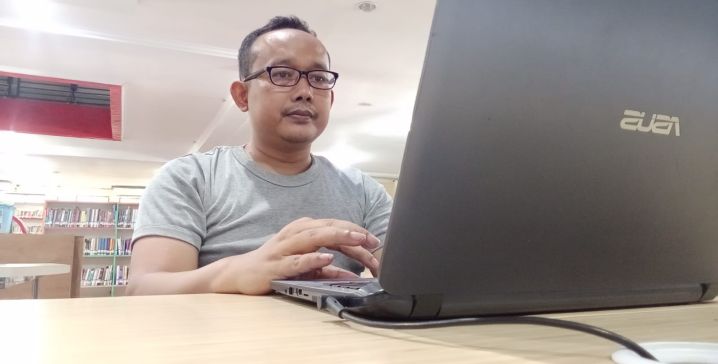
Between suhoor and early morning, writing became almost surgical in its precision. The silence of 4:00 a.m. Scotland is different from Indonesia’s dawn chorus. There is no Adhan echoing across neighborhoods — only stillness and the distant cry of seagulls. Yet in that stillness, something profound emerges.
Fasting transforms from obligation into cognitive architecture.
Without coffee breaks and social distractions, research narrows into focus. Words form faster. Arguments crystallize. The thesis advances not despite Ramadan, but partly because of it.
Fatigue in the late afternoon is real. University corridors stretch longer than usual. Emails feel heavier. But there is dignity in that exhaustion — a reminder that scholarship, like worship, is sustained by discipline rather than mood.
The Modern Rihla
The medieval thinker Ibn Khaldun described rihla — scholarly travel — as the path toward intellectual maturation. One does not simply gather knowledge; one becomes remade by geography.
For Cecep Mustafa, the LPDP-funded journey was precisely that: a modern rihla.
Research ceased to be merely academic labor. It became ibadah. Intention — niyyah — transformed late-night revisions and early-morning drafts into acts of devotion. The PhD stopped being about title acquisition and began to resemble ethical refinement.
Al-Falah — true success — slowly detached itself from the ambition of credentials. It reattached itself to character.
The long Scottish sun became a mirror. It revealed limits, yes — but also resilience.
Community as Survival
Yet even ascetics need community.
The Indonesian Student Association (PPI) chapters in Scotland function as a hearth in exile. In modest flats and university halls, events like Foodnesia turn cold stone buildings into temporary Indonesian enclaves. The scent of rendang is not merely culinary — it is psychological oxygen.
Halal logistics become an unexpected discipline. Knowing where to buy dates, meat, or even Indomie becomes part of the scholar’s survival strategy. Explaining to a Scottish supervisor why instant noodles carry emotional gravity is an exercise in cross-cultural philosophy.
These rituals matter. They anchor identity. They remind the scholar that distance does not dissolve belonging.
From Lecturer to Learner — and Back Again
There is irony in leaving Indonesia as a lecturer, only to become once more a student under foreign skies.
Year one humbles.
Year two stabilizes.
Year three accelerates productivity.
Year four transforms the once-disoriented newcomer into a mentor for incoming Indonesian scholars.
The transformation is subtle but profound. The lecturer from Ibnu Chaldun University returns not merely with research findings, but with recalibrated endurance and broadened vision.
The doctoral title, when it arrives, feels secondary.
What feels primary is the reconstruction of self.
The Beneficent Return
When Cecep Mustafa eventually returns to Indonesia — to the postgraduate classrooms of Ibnu Chaldun University — he does not bring back only a dissertation. He carries the imprint of the North: discipline forged under nineteen-hour daylight, resilience cultivated in silence, humility shaped by linguistic missteps and spiritual endurance.
The High-Latitude Ascetic is not defined by deprivation, but by integration.
He embodies two climates within himself:
The steady spiritual rhythm of the equator.
The expansive intellectual horizon of the North.
And perhaps that is the true doctorate — not mastery over a field of study, but mastery over one’s own capacity to endure, adapt, and serve.
For in the end, the purpose of knowledge is not personal elevation, but beneficial contribution — Al-ilm an-nafi’ — knowledge that returns home bearing light.
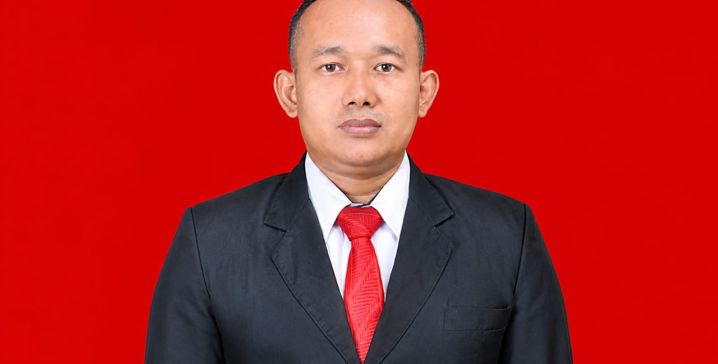
Cecep Mustafa
Cecep Mustafa is known as a postgraduate lecturer at Ibn Chaldun University (Universitas Ibn Khaldun), located in Jakarta, Indonesia.
Orchid ID: https://orcid.org/my-orcid?orcid=0000-0003-0037-497X